
Ritchie County Court Records After a Jail Arrest
Ritchie County uses West Virginia's regional jail system, so a local arrest that results in jail custody is usually booked through North Central Regional Jail and Correctional Facility in Greenwood. That jail record is not the same thing as the court case. The court record starts when a complaint, information, indictment, or other charging document is filed in the correct court. West Virginia law describes a criminal complaint as a sworn written statement of the essential facts, and that complaint often supplies the first formal court record after an arrest.
For custody status, booking timing, and regional jail search details, use jail inmate records. For the separate photo question, use jail mugshots. The court record is where the filed charge list, case number, hearing activity, bond order, warrant history, amended charges, dismissal, plea, trial result, or sentencing entry should be confirmed. The West Virginia Regional Jails search page itself warns that sentencing and criminal-case information should be checked with the court that has jurisdiction.
How to Find Ritchie County Court Records After an Arrest
West Virginia now has two main online court access routes for Ritchie County criminal cases. Magistrate Case Record Search covers magistrate records and can be searched by first name, last name, or case number. The Judiciary notes that the online magistrate system returns up to 30 records, but court documents are not posted there. Copies must be requested from the magistrate court clerk in the county where the case was filed, with the statutory copy fee charged by the clerk.
The official magistrate portal begins with a disclaimer and continue checkbox before search access: Magistrate Case Record Search.
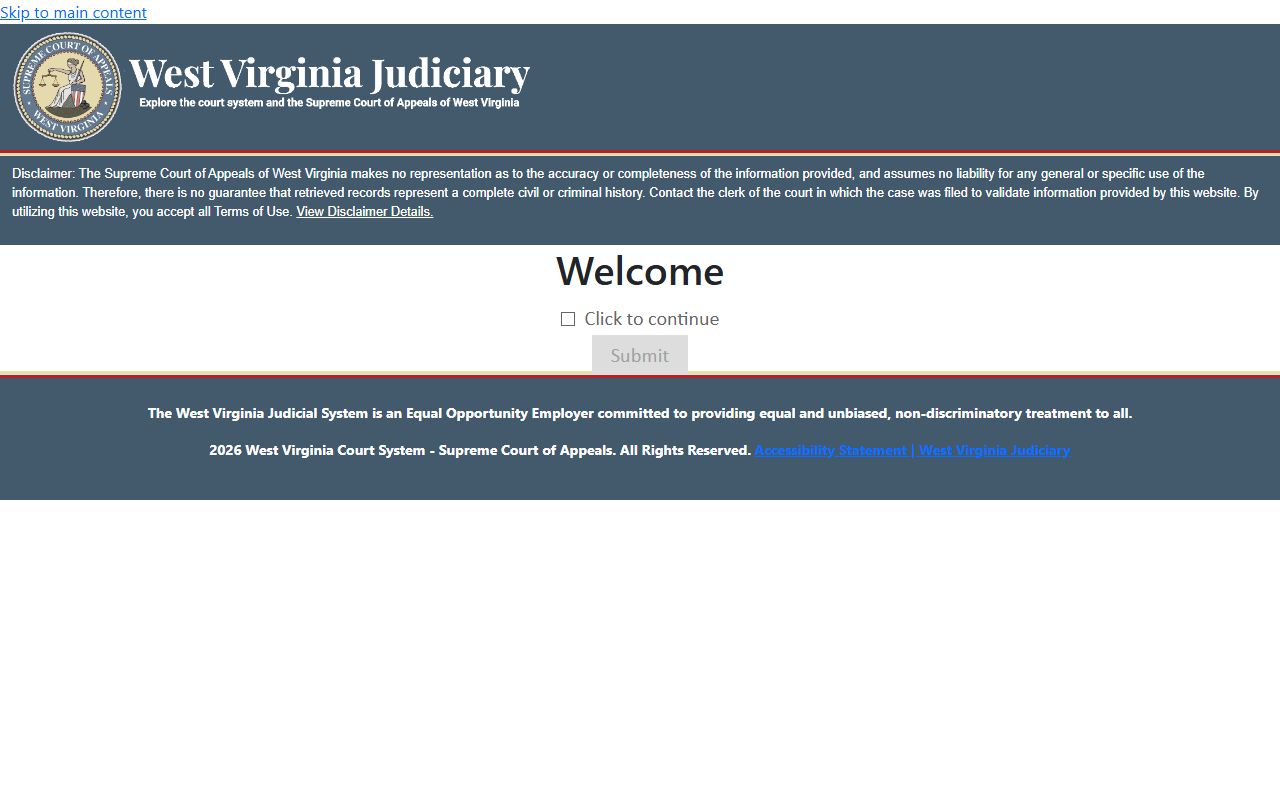
That screen is important because magistrate results should be validated with the clerk when accuracy, completeness, or document copies matter.
WVPASS is the public access route for circuit court records. The Supreme Court of Appeals of West Virginia announced a statewide WVPASS launch date of March 10, 2025, with circuit records available for all 55 counties and public circuit documents dating back to 1999. Registration is free, searching is free, and the official release and FAQ material describe a small per-page charge for viewing or downloading documents.
The circuit portal for statewide public access is WVPASS circuit court records.
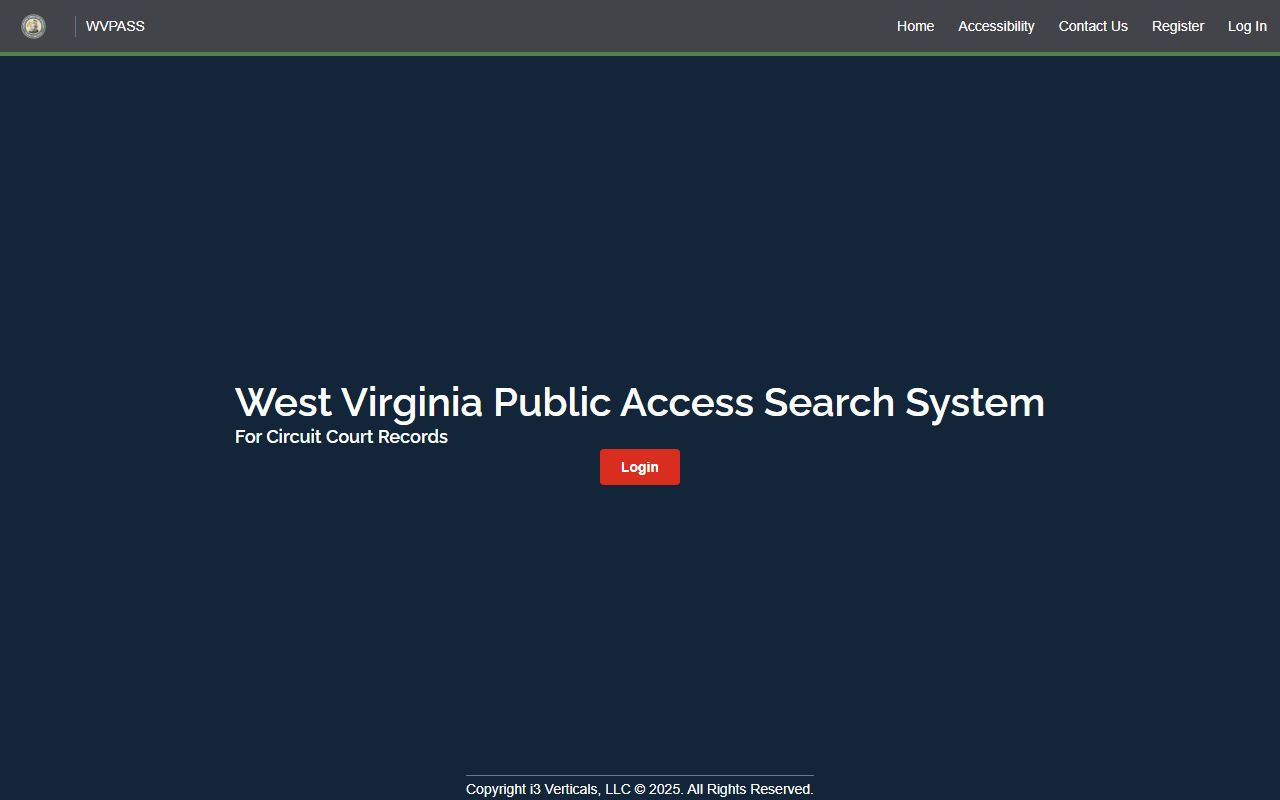
Use WVPASS when the Ritchie County arrest has moved into circuit court, especially for felony documents, indictment activity, plea records, and sentencing orders.
The state court access landing page identifies both systems from one official starting point: West Virginia Judiciary Court Record Access.
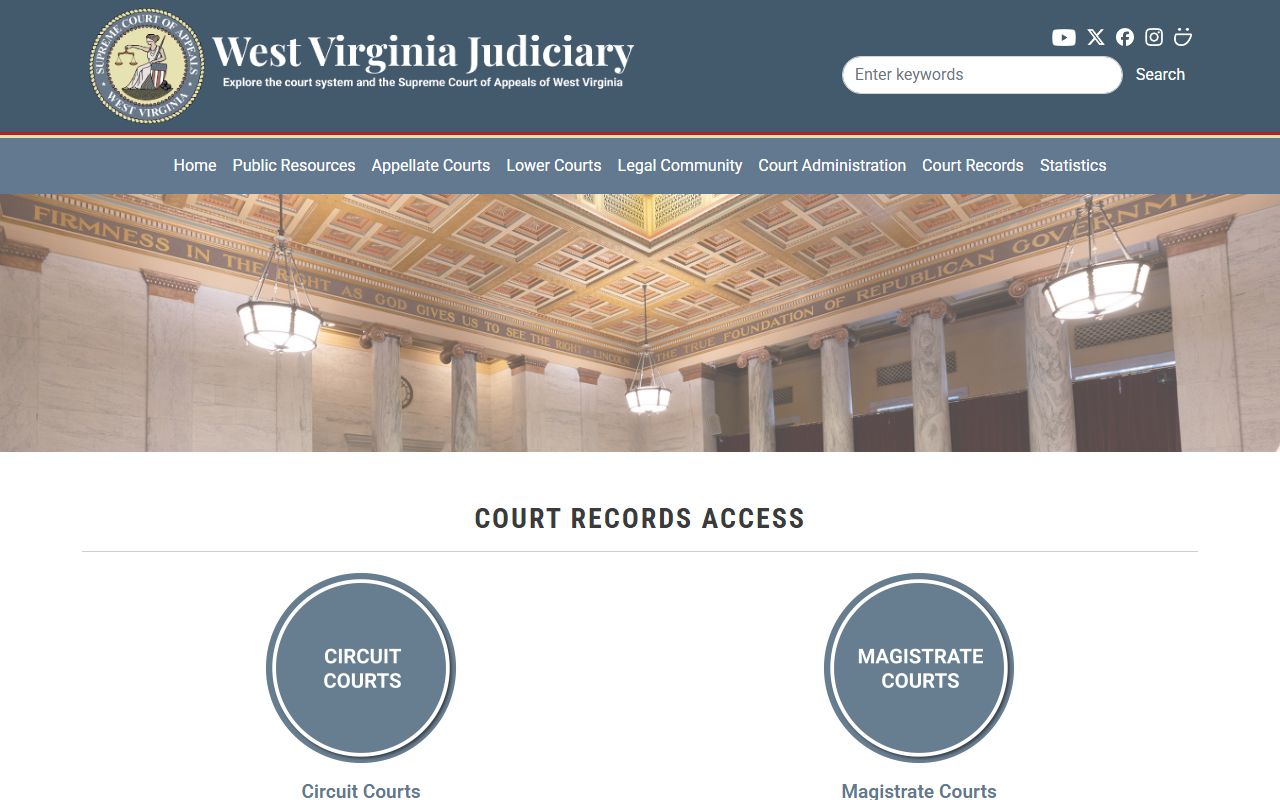
That statewide page is useful because Ritchie County arrest cases may divide between magistrate and circuit court. A misdemeanor or early felony proceeding may appear in magistrate search, while felony cases and later circuit documents should be checked in WVPASS.
- Start with Magistrate Case Record Search when the arrest is recent, involves a first appearance, bond, misdemeanor charge, preliminary felony step, or magistrate warrant.
- Search by the defendant's name or a known case number. Use spelling variations when a jail booking name and court filing name do not match exactly.
- Check WVPASS for circuit court activity, especially after indictment, information, felony transfer, plea, trial, or sentencing.
- Call or visit the appropriate Ritchie County clerk when the online record is unclear, when copies are needed, or when online results conflict with jail information.
Ritchie County court contacts are listed on the West Virginia Judiciary county page. The Judiciary page lists the circuit clerk at the Ritchie County Judicial Building, 109 North Street, Suite 203, Harrisville, WV 26362, phone 304-643-2164 ext. 1 or 128. The magistrate clerk is listed as Lora Nutt at 109 North Street, Suite 102, Harrisville, WV 26362, phone 304-643-4409. The county and state pages had some conflicting officeholder details during research, so the office phone number is the better verification route before relying on a name.
The official Ritchie County court information page is the local contact source for circuit, family, magistrate, and probation details: Ritchie County court information.
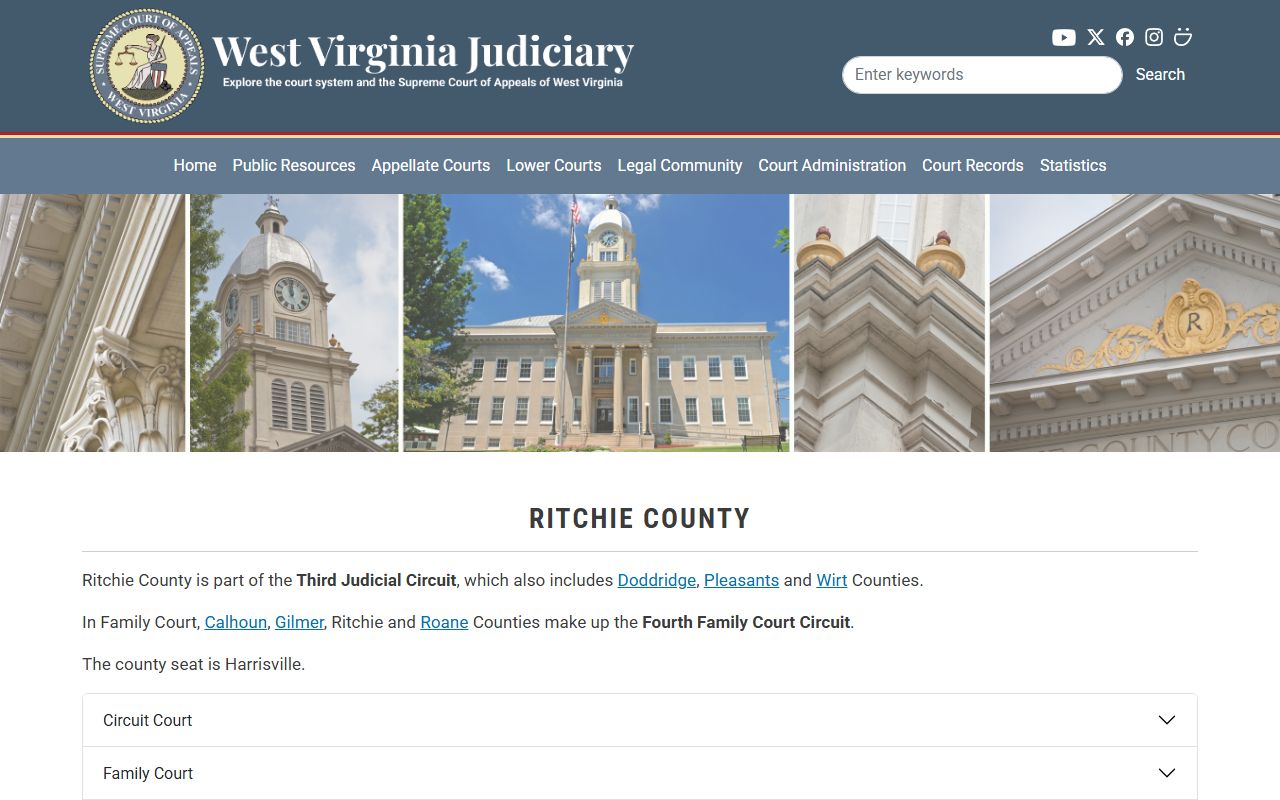
Use that local page to decide which clerk can validate a case record. Online search screens are helpful, but the clerk is still the source for document copies and for resolving case-number or party-name uncertainty.
How Charges Get Filed After an Arrest
A Ritchie County arrest may begin with the sheriff, West Virginia State Police, or another lawful agency. Jail intake creates booking and custody data, but the charge record belongs to the court. In the first stage, a complaint can state the essential facts under WV Code §62-1-1. The prosecutor then decides how to pursue, amend, dismiss, or resolve charges. Felony matters may continue through preliminary procedures and then proceed in circuit court by indictment or information.
| Document | Who Uses It | Common Role | What to Check |
|---|---|---|---|
| Complaint | Officer or prosecutor through magistrate court | Starts many criminal cases after arrest and states essential facts under oath. | Charge label, date, sworn factual basis, magistrate case number, bond notes. |
| Information | Prosecuting attorney | May file formal charges in circuit court without an indictment where legally allowed. | Whether the filed count differs from the jail booking description. |
| Indictment | Grand jury through circuit court | Formal felony accusation returned after grand jury review. | Count numbers, offense dates, statutory references, arraignment and plea entries. |
| Order or docket entry | Magistrate or circuit judge | Records bond, hearings, warrants, dismissals, pleas, sentencing, or other rulings. | Current status and any later change to the original charge. |
The Ritchie County Prosecuting Attorney's office is a key part of this path. The official county page lists Samuel Rogers II, phone 304-643-2164 Ext. 233, fax 304-643-2464, and address 115 East Main Street, Room 302, Harrisville, WV 26362. The prosecutor's filed charges may be narrower, broader, or differently worded than the jail booking text.
The county prosecutor directory provides the local office listing used for charge-routing context: Ritchie County Prosecuting Attorney.
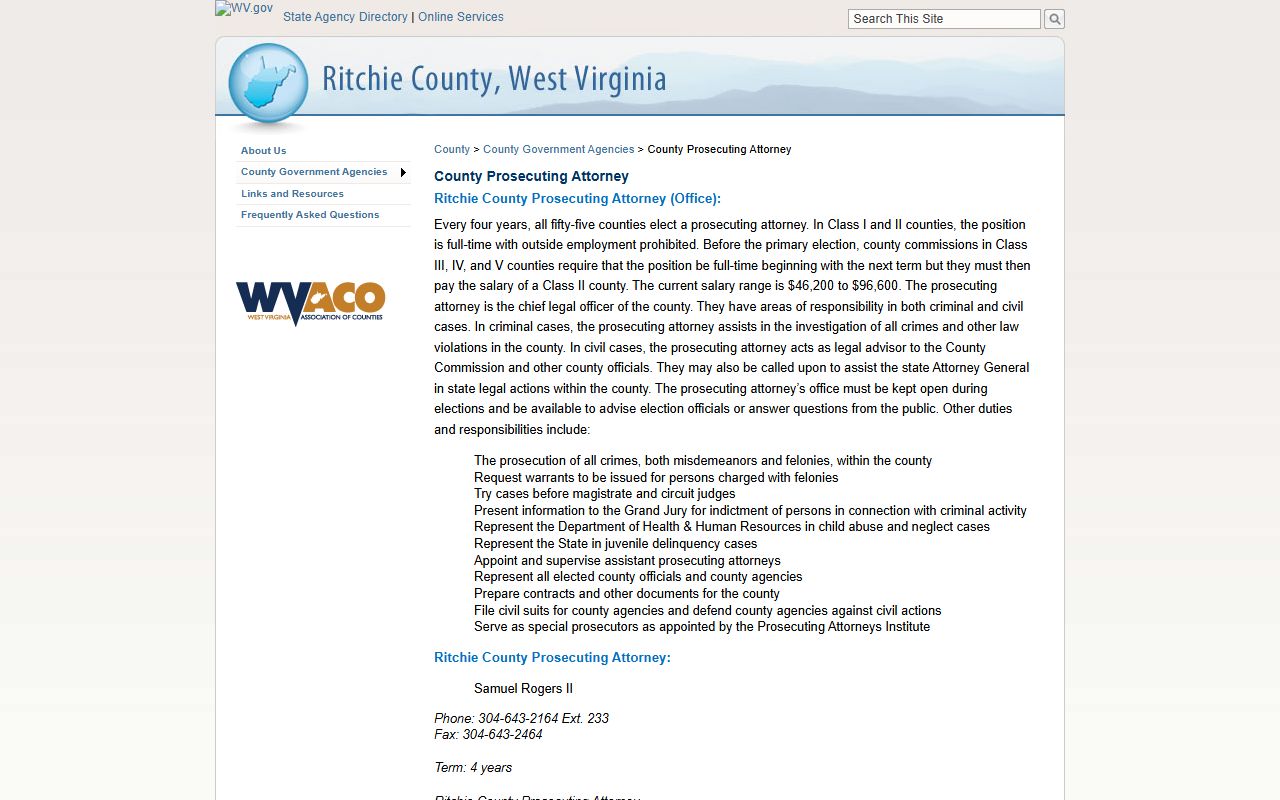
That office does not replace the court clerk for copies, but it explains why a charge may change after booking. Prosecutor decisions drive amendments, plea negotiations, dismissals, informations, indictments, and trial filings.
Charge Status and What It Means
Charges are not static. A booking may show the offense named at intake, while the case record may later show a different charge, an added count, a reduced count, dismissal, plea, conviction, or transfer to circuit court. For Ritchie County court records after an arrest, read each count separately and check the most recent docket entry rather than assuming the first charge line is the outcome.
| Status | What It Means | Why It Matters |
|---|---|---|
| Pending | The charge remains open and has not reached final disposition. | Bond, hearings, warrants, or plea deadlines may still affect custody. |
| Amended | The filed accusation changed after the original complaint or indictment. | The current court charge may not match the jail booking language. |
| Reduced | The offense level or count was lowered, often through amendment or plea. | Do not describe the original higher charge as the final result without checking disposition. |
| Dismissed | The court ended that charge without conviction. | Other counts, warrants, or holds may still remain. |
| Nolle prosequi | The prosecutor declined to continue a charge, subject to court handling and case context. | It is a prosecutor action, not the same thing as an acquittal. |
| Convicted | The charge ended in a guilty plea, finding, or verdict. | Sentencing, fines, probation, jail, or prison transfer may follow. |
Bond and First Appearance After an Arrest
Bond is set by the court, not by a Ritchie County jail roster. After arrest and booking, a magistrate or judge decides release conditions. The Ritchie County magistrate contacts listed by the Judiciary are Magistrate Lorena Cantwell at 304-643-2353 and Magistrate Leesa D. Snodgrass at 304-643-2658, with the magistrate clerk at 304-643-4409. Because no official North Central bond payment table was located, payment methods, hours, and exact release processing should be confirmed with the court or North Central Regional Jail at (304) 873-1384.
| Bond Type | How It Works | Practical Check |
|---|---|---|
| Cash bond | Money is deposited to secure appearance under court conditions. | Confirm accepted payment method and where payment must be made. |
| Surety bond | A surety or bondsman posts the obligation where allowed and approved. | Confirm the case has no separate hold that blocks release. |
| Personal recognizance | Release is based on a promise to appear and obey conditions, without upfront cash. | Read the order for reporting, travel, contact, or supervision limits. |
| Property bond | Property may be pledged if permitted and accepted by the court. | Ask the clerk what documentation is required. |
| No-bond hold | Release is blocked by court order or another authority. | Look for warrants, detainers, parole or probation holds, federal holds, or ICE issues. |
A bond entry in an online record should be treated as a clue, not a guarantee of release. A second Ritchie County warrant, another county warrant, a parole hold, probation matter, federal hold, or transport order can keep a person in custody after one bond is posted.
Warrants That Lead to an Arrest
No official Ritchie County active-warrant search, public sheriff warrant list, or sheriff/police mobile app was located in the research. That means warrant checks should use a verification chain. Start with the Ritchie County Sheriff's Office at 109 North Street, Harrisville, WV 26362, phone 304-643-2262, for local law-enforcement questions. For magistrate warrants, bench warrants, failure-to-appear issues, and misdemeanor or preliminary felony matters, contact magistrate court. For circuit-level felony warrants or capias entries, search WVPASS and contact the circuit clerk.
An arrest warrant authorizes the arrest of a named person. A bench warrant is usually tied to missed court or a violation of a court order. A search warrant authorizes a search and is not the same thing as a public arrest roster. A fugitive warrant may involve another county, another state, or federal authorities. Once a warrant is served and the person is booked into regional jail custody, the person may appear in the WV Regional Jails search or Daily Incarcerations, but booking data can lag. VINELink may help with custody notification after a warrant arrest, but it is not a warrant-search database.
Charges vs. Convictions
An arrest and charge are accusations. A conviction is a court result. Ritchie County court records after a jail arrest should be read with that distinction in mind, especially when a jail booking page, court docket, and later disposition use different wording. A person may be arrested, charged, and later have the charge dismissed, reduced, amended, or resolved by plea or trial.
| Charge | Conviction | |
|---|---|---|
| Stage | Accusation filed after arrest or through later charging document. | Final finding or plea on a specific count. |
| Proof level | Based on probable cause or formal accusation, depending on stage. | Requires guilty plea, verdict, or court finding. |
| Where to verify | Complaint, magistrate record, WVPASS case, clerk copy. | Disposition entry, sentencing order, judgment, or clerk-certified record. |
| How to describe it | Use accused, charged, alleged, or pending unless disposition is known. | Use convicted only when the court record shows conviction. |
Sealed vs. Expunged Arrest Records
West Virginia expungement law is more specific than a general request to hide a record. WV Code §61-11-25 addresses expungement paths for certain dismissed, not-guilty, and deferred matters. WV Code §61-11-26 addresses expungement for certain convictions. Eligibility depends on the charge, disposition, timing, prior record, notice requirements, objections, and court order. A person trying to clear a Ritchie County arrest record should rely on the statute, court forms, and legal advice rather than assuming a dismissed jail booking disappears automatically.
| Sealed | Expunged | |
|---|---|---|
| Public visibility | Public access is restricted by court order or rule. | The eligible record is removed or treated according to the expungement order. |
| How it happens | Through a court order, rule, or restricted-record status. | Through a statutory expungement process and court order. |
| Who may still see it | Some government or justice users may retain limited access. | Access depends on the statute and order. |
| Ritchie County check | Ask the filing court clerk whether the public file is restricted. | Confirm that the court granted expungement and that agencies received the order. |
Background Check Considerations
Public court searches are useful for personal review, family custody checks, journalism, and locating a case after a Ritchie County arrest. They are not the same as a regulated employment, housing, credit, insurance, or tenant-screening background check. A casual search can miss sealed records, expunged records, data-entry delays, cases filed under a variant name, and records held only at the clerk's office.
Important: This site is not a consumer reporting agency and may not be used for FCRA-covered decisions.
Restricted Court Records After an Arrest in Ritchie County
West Virginia FOIA starts from broad access to public records, but it also recognizes exemptions and restrictions. WV Code §29B-1-3 says requests go to the custodian of the record, while §29B-1-4 lists exemptions. Juvenile records, sealed matters, expunged cases, sensitive victim information, protected investigative material, and some law-enforcement records may not be available through ordinary public search. For Ritchie County arrest-related court records, the right custodian depends on the record: the magistrate clerk for magistrate filings, circuit clerk for circuit filings, sheriff for local law-enforcement records, and WVDCR or North Central Regional Jail for regional jail custody records.